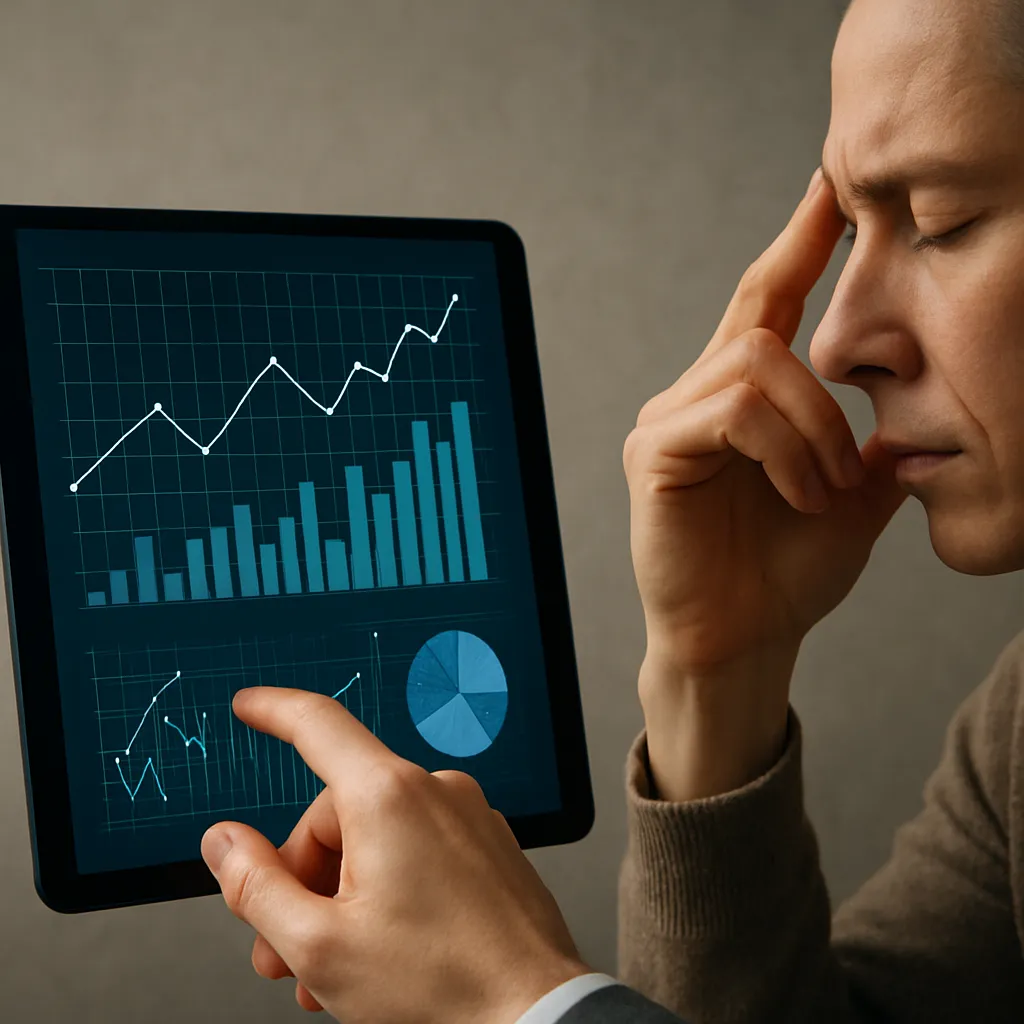
The interplay between data and intuition shapes the way analysts, researchers, and decision-makers navigate complex problems. While **data** offers a solid foundation for empirical evidence, **intuition** drives creativity and rapid assessments when information is incomplete. Understanding how these two forces complement one another is crucial for crafting robust strategies, ensuring accurate predictions, and fostering innovation across diverse fields.
Foundations of Data and Intuition: Complementary Forces
Statistical methods provide a systematic framework for extracting meaningful insights from numbers. Techniques such as regression analysis, hypothesis testing, and Bayesian **inference** enable practitioners to quantify relationships, assess the strength of evidence, and update beliefs in light of new observations. However, data rarely tells the full story. Human intuition often fills gaps where measurement is sparse or noisy, guiding initial model selection and suggesting **patterns** that automated algorithms might overlook.
Role of Data in Empirical Validation
- Model Building: Establishes the structure for predicting outcomes and evaluating assumptions.
- Hypothesis Testing: Uses p-values and confidence intervals to determine statistical significance.
- Data Cleaning and Preprocessing: Ensures quality inputs by handling missing values, outliers, and inconsistencies.
Power of Intuition in Exploratory Analysis
Experienced analysts often rely on a **hypothesis** or educated guess to direct initial investigations. This intuitive spark can highlight potential anomalies or hidden correlations. While intuition alone can be prone to errors—especially under the influence of cognitive biases—it remains invaluable for:
- Identifying unusual trends before formal statistical tests
- Generating creative scenarios for simulation studies
- Spotting data-entry issues that automated scripts may miss
By combining rigorous statistical protocols with informed instincts, practitioners can navigate the trade-off between overfitting models to random noise and underfitting by oversimplifying complex phenomena.
Balancing Quantitative Rigor with Qualitative Insight
Purely quantitative approaches often promise objective precision, yet they may overlook contextual subtleties. Conversely, unstructured qualitative judgment can suffer from inconsistency and low reproducibility. Striking a balance requires recognizing the strengths and limitations of both analytics and gut feelings.
Techniques for Harmonizing Data and Intuition
- Triangulation: Integrate multiple data sources—surveys, observational studies, and historical records—to validate intuitive hunches.
- Bayesian Frameworks: Encode expert opinions as priors, then update beliefs according to observed evidence, blending soft intuition with hard numbers.
- Cross-Validation: Use partitioned datasets to test whether patterns suggested by intuition generalize beyond the original sample.
Consider a marketing analyst estimating the success of a new campaign. Initial impressions may come from domain expertise and anecdotal feedback. By implementing A/B testing, the analyst gathers empirical results, measuring conversion rates and customer engagement. The combination of gut-driven hypotheses and rigorous evaluation safeguards against both confirmation bias and purely mechanical decision-making.
Managing Uncertainty
Every analytical endeavor must confront **uncertainty**. Whether arising from sampling error, measurement imprecision, or evolving external conditions, uncertainty challenges decision-makers to remain adaptable. Intuition can help assess the plausibility of worst-case scenarios and identify when data patterns are likely spurious. Statistical measures, such as prediction intervals, quantify the expected range of outcomes, while intuitive judgment determines whether those outcomes align with operational realities.
Practical Applications and Challenges in Decision-Making
Across industries, the synthesis of data and intuition manifests in diverse applications—from healthcare diagnostics to financial forecasting and product design. Each domain poses unique hurdles in calibrating the two approaches effectively.
Healthcare and Clinical Research
Medical professionals combine clinical trial results with practitioner experience. For instance, a physician’s intuitive sense of patient history can inform risk assessments beyond standard scoring systems. Evidence-based protocols rely on large-scale studies to establish treatment guidelines, whereas hands-on expertise ensures personalized care tailored to individual patient nuances.
Financial Modeling and Risk Assessment
- Algorithmic Trading: Quantitative models identify fleeting market inefficiencies, while traders’ instincts detect structural shifts not yet captured by historical data.
- Credit Scoring: Machine learning algorithms process vast borrower datasets, but lending officers may override automated decisions based on contextual factors like local economic conditions.
- Portfolio Management: Intuition can guide allocation adjustments during periods of heightened volatility, balancing algorithmic recommendations with real-time sentiment analysis.
Innovation and Product Development
In creative industries, consumer preferences evolve rapidly. Product teams leverage user analytics and A/B experimentation to validate feature adoption. Yet, breakthroughs often originate from visionary leadership and experimental prototypes driven by intuitive leaps. By combining rigorous user testing with open-ended brainstorming sessions, organizations fuel a cycle of iterative improvement grounded in both data and imagination.
Despite the clear benefits, several challenges persist:
- Overreliance on Data: Blind trust in algorithms may perpetuate historical biases or ignore emerging trends.
- Excessive Intuition: Decisions driven solely by personal judgment risk inconsistency and lack of accountability.
- Communication Gaps: Translating statistical findings into actionable insights requires fluency in both technical language and intuitive narrative.
Effective teams cultivate an environment where data scientists, domain experts, and decision-makers engage in constructive dialogue. Statistical visualizations, such as heatmaps and decision trees, serve as common ground—enabling intuitive minds to grasp quantitative results quickly and data-driven specialists to appreciate contextual considerations. In this collaborative ecosystem, **decision-making** transcends the limitations of any single approach, harnessing the full spectrum of analytical power and human creativity.