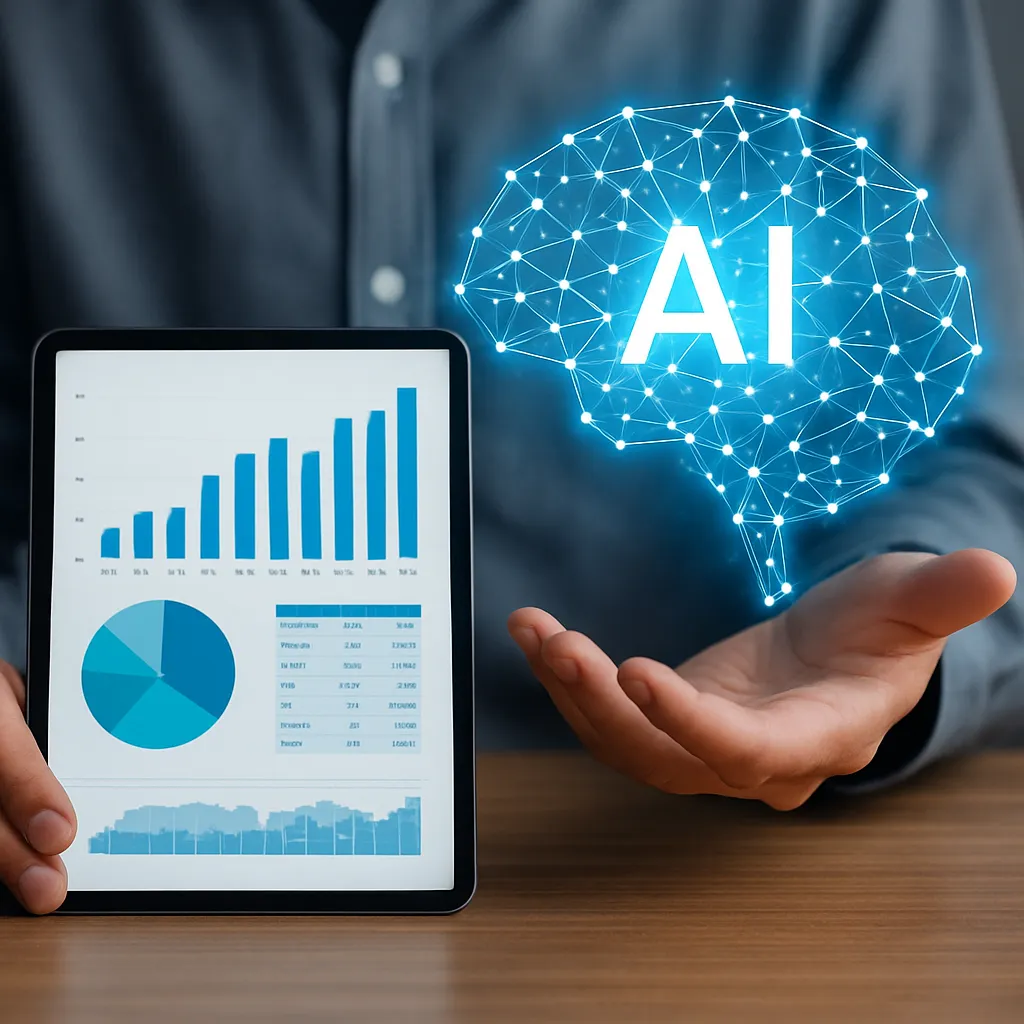
Statistical analysis has traditionally been perceived as a domain reserved for experts well-versed in complex mathematical models and programming languages. Recent advancements in artificial intelligence have begun to dismantle these barriers, enabling a broader audience to harness data-driven decision-making. By integrating machine learning frameworks, natural language processing, and automated visualization tools, AI is revolutionizing the way we approach statistical problems, from routine data cleaning to advanced predictive modeling.
Revolutionizing Data Preparation with Automation
One of the most time-consuming steps in any statistical project is data preparation. Missing values, inconsistent formats, and outliers can derail an analysis before it even begins. Modern AI-powered platforms offer:
- Automated detection of anomalies and outliers using algorithms that learn from historical patterns.
- Intelligent imputation strategies that preserve data integrity by predicting missing entries based on correlations.
- Real-time recommendations for data schema standardization, reducing manual effort.
By delegating repetitive tasks to AI, analysts can focus on extracting insights rather than wrestling with raw datasets. These tools often come with interactive dashboards that suggest transformations and highlight potential biases early in the process, ensuring that any downstream models are both robust and transparent.
Democratizing Statistical Modeling through No-Code Interfaces
Traditional statistical modeling required proficiency in languages like R or Python. AI-driven no-code and low-code platforms are now making statistical techniques accessible to users with minimal programming background. Key features include:
- Drag-and-drop model builders that guide users through regression, classification, and clustering workflows.
- AutoML modules that automatically select the best-performing algorithm based on evaluation metrics such as AIC, BIC, or ROC curves.
- Contextual help and inline tutorials, providing step-by-step explanations of statistical concepts like hypothesis testing or confidence intervals.
These solutions lower the entry barrier for businesses and academic researchers alike, promoting wider adoption of data science methods. As a result, teams can generate predictive models with high accuracy without extensive coding, fostering a culture of data-informed decision-making across departments.
Enhancing Interpretability with Advanced Visualizations
Visual representation of statistical results is crucial for communicating findings to stakeholders. Artificial intelligence is boosting visual analytics by:
- Generating dynamic plots that adapt based on user queries, from heatmaps illustrating correlation matrices to interactive time series forecasts.
- Recommending the optimal chart type for a given dataset, taking into account factors like variable distribution and sample size.
- Incorporating explanatory annotations powered by NLP, which translate complex statistical jargon into plain language.
These AI-assisted visualizations bridge the gap between technical experts and non-technical audiences, promoting better understanding and collaboration. By automatically highlighting significant trends, potential outliers, and areas of concern, stakeholders gain a clearer view of the underlying patterns driving the data.
Ensuring Ethical Use Through Bias Detection and Fairness Checks
Bias in data and algorithms can lead to unfair or discriminatory outcomes. AI systems are being leveraged to conduct rigorous fairness assessments in statistical analyses:
- Automated bias detection modules that flag disproportionate treatment of particular demographic groups.
- Counterfactual analysis tools that simulate “what-if” scenarios to evaluate model behavior under varying conditions.
- Fairness metrics dashboards that track indicators such as disparate impact ratio and equal opportunity difference over time.
By integrating these capabilities into statistical workflows, organizations can proactively identify and mitigate bias, uphold privacy standards, and ensure that their predictive models adhere to ethical guidelines. This proactive approach is essential for maintaining public trust and meeting regulatory compliance in sensitive domains like finance and healthcare.
Scaling Statistical Insights with Cloud-Based AI Services
Cloud computing has unlocked unprecedented scalability for statistical analyses. AI-driven cloud platforms offer:
- On-demand processing power for large-scale simulations, Monte Carlo methods, and bootstrap procedures, reducing computation times from days to hours.
- Distributed machine learning frameworks that parallelize training across multiple nodes, facilitating the exploration of complex models such as deep neural networks.
- Secure data pipelines with built-in encryption, identity management, and audit trails, ensuring that sensitive information remains protected.
These services democratize access to powerful computational resources, enabling small teams and individual researchers to tackle projects that were previously the domain of large institutions. The result is a rapid acceleration of innovation and more diverse contributions to the field of statistics.
Leveraging Natural Language Interfaces for Seamless Querying
Perhaps one of the most transformative developments in AI-driven statistics is the advent of natural language querying. Users can now interact with datasets using plain English commands:
- Chatbot-style assistants that translate questions like “What is the average revenue growth by region this quarter?” into SQL or analytical scripts.
- Context-aware suggestion engines that refine queries based on previous interactions, reducing the iteration loop for complex data requests.
- Real-time conversational explanations that clarify statistical outputs, ensuring that non-experts grasp the meaning behind p-values, standard errors, and effect sizes.
This innovation dramatically lowers the barrier to *accessibility*, allowing executives, marketers, and even educators to perform sophisticated analyses without writing a single line of code. The synergy of AI and natural language processing is redefining the interface between humans and data.
Future Directions: Towards a Collaborative Human–AI Ecosystem
As AI continues to evolve, its integration with statistical practice points toward a collaborative future. Emerging trends include:
- AI-enhanced peer review systems that automatically check statistical rigor and reproducibility before publication.
- Interactive AI tutors that adaptively teach core statistical concepts, offering personalized exercises based on learner performance.
- Federated learning frameworks that enable multi-institutional studies without sharing raw data, preserving privacy while combining knowledge.
By fostering a symbiotic relationship between human expertise and machine intelligence, the field of statistics is poised to become more inclusive, efficient, and democratized than ever before.