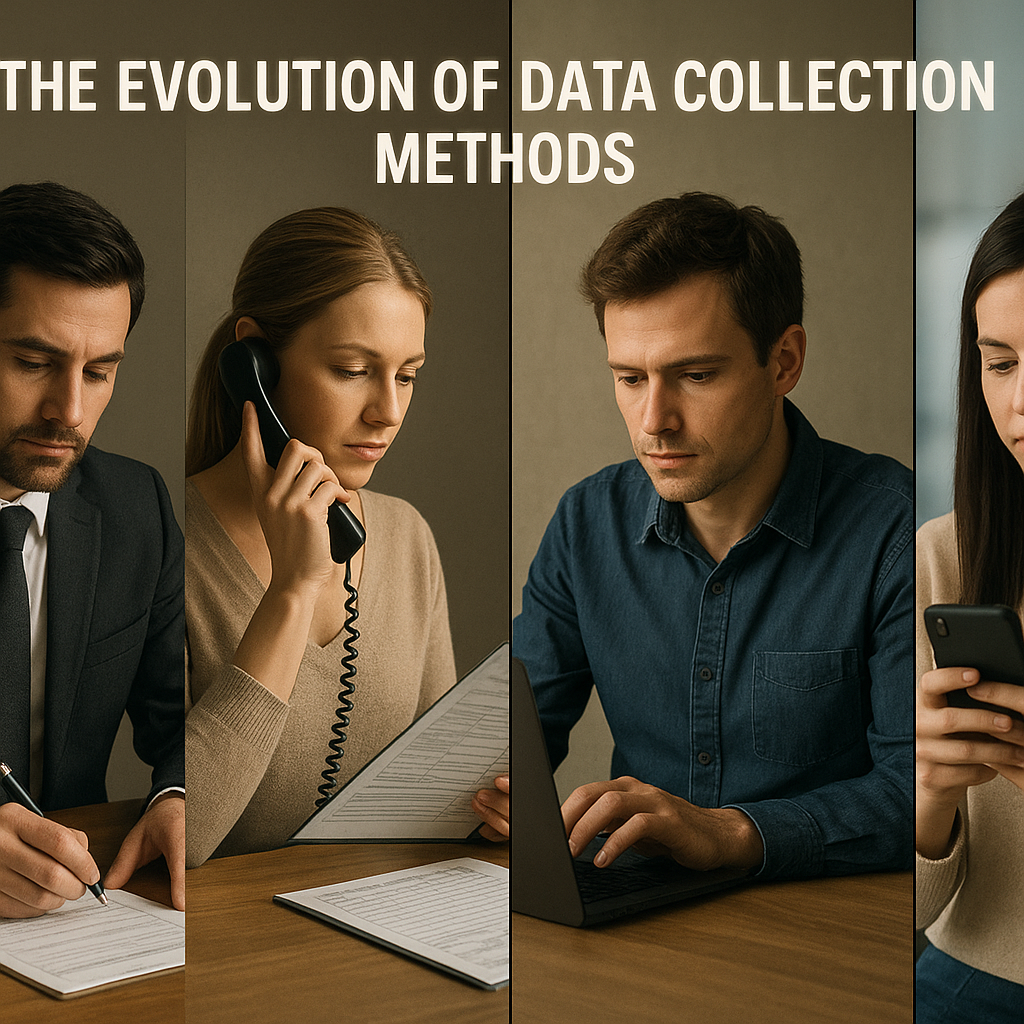
The journey of Data Collection has witnessed remarkable transformations, driven by technological breakthroughs and growing demands for precision. From hand‐written ledgers to sophisticated sensor networks, each stage in this Evolution has shaped modern Statistics, enhancing both Accuracy and Reliability. This exploration highlights key milestones and emerging trends that define the art and science of gathering information.
Historical Beginnings: Manual Surveys and Observations
Early Censuses
Centuries ago, rulers and scholars relied on headcounts and tally marks to understand populations and resources. Carried out by scribes, these manual efforts often spanned months or years, offering only periodic snapshots. Despite their limitations, these projects laid the groundwork for systematic data gathering.
Observational Records
Naturalists, astronomers, and merchants meticulously logged daily occurrences, tracking phenomena from weather patterns to trade volumes. Their notebooks and journals served as early databases, where patterns emerged over time. Although prone to human error, these records underscored the value of structured documentation.
Challenges of Manual Methods
- Time‐consuming transcription and collation
- Limited sample sizes due to logistical constraints
- High potential for transcription errors and bias
Mechanization and the Rise of Electronic Data Acquisition
Punch Cards and Tabulating Machines
The late 19th and early 20th centuries introduced mechanical tabulators. Inventors like Herman Hollerith harnessed Technology to encode information onto punch cards. These machines dramatically accelerated census processing, reducing years of work into mere months and foreshadowing modern computing.
Analog to Digital Transition
By mid‐20th century, analog sensors—such as thermometers linked to chart recorders—began converting physical measurements into continuous graphs. Soon after, the advent of digital computers enabled binary representation of data, marking a pivotal shift toward automated Innovation in measurement and storage.
Key Advantages
- Accelerated processing speeds
- Greater consistency in recording
- Scalability for large datasets
The Internet Era and the Emergence of Big Data
Web-Based Surveys and Digital Logs
The proliferation of the internet in the 1990s empowered researchers to deploy online questionnaires, reaching global audiences within hours. Server logs and clickstream data provided passive tracking of user behavior, creating vast repositories of actionable metrics.
Social Media and User-Generated Content
Platforms like Twitter and Facebook unlocked real-time public sentiment analysis. Natural language processing tools sift through millions of posts to detect trends, topics, and emerging concerns. This shift toward unstructured data expanded the scope of analytics far beyond traditional numeric inputs.
Big Data Frameworks
- Distributed storage systems (e.g., Hadoop)
- Parallel processing engines (e.g., Spark)
- Scalable databases (NoSQL, NewSQL)
Contemporary Frontiers: IoT, AI and Real-Time Analytics
Internet of Things (IoT)
Embedded sensors in everyday devices—from smart thermostats to industrial machinery—generate continuous streams of data. These devices facilitate granular monitoring of environments, mechanical performance, and human activity, transforming any connected object into a data source.
Artificial Intelligence and Machine Learning
Advanced algorithms now automate the cleansing, integration, and interpretation of colossal datasets. Machine learning models identify complex patterns, predict future outcomes, and adapt to new information without explicit programming. This synergy between data acquisition and intelligent processing fuels unprecedented levels of insight.
Real-Time Dashboards and Decision Support
Real-time Analytics platforms aggregate incoming data and update dashboards instantaneously. Organizations leverage these systems to respond to market shifts, optimize operations, and manage risks on the fly. The capacity to analyze streams of information as they arrive marks a new era in statistical practice.
- Edge computing for reduced latency
- Cloud platforms for elastic storage and compute
- Enhanced data governance and security protocols
Looking Ahead: Ethical and Methodological Considerations
Privacy and Consent
As data sources proliferate, safeguarding individual rights becomes paramount. Striking a balance between innovation and privacy requires robust anonymization techniques and transparent consent frameworks.
Quality and Bias Management
Automated systems can perpetuate existing biases if training datasets lack diversity. Rigorous validation methods and ongoing audits are essential to ensure equitable and trustworthy outcomes.
Integration of Multimodal Data
Future methodologies will merge textual, visual, auditory, and sensory streams into cohesive analytical pipelines. Such integration promises richer insights but demands sophisticated fusion techniques and computational resources.
The trajectory of data collection continues upward, propelled by relentless technological progress and growing demands for timely insights. Researchers and practitioners must navigate a dynamic landscape, where both the methods and the ethical frameworks evolve in tandem with emerging possibilities.