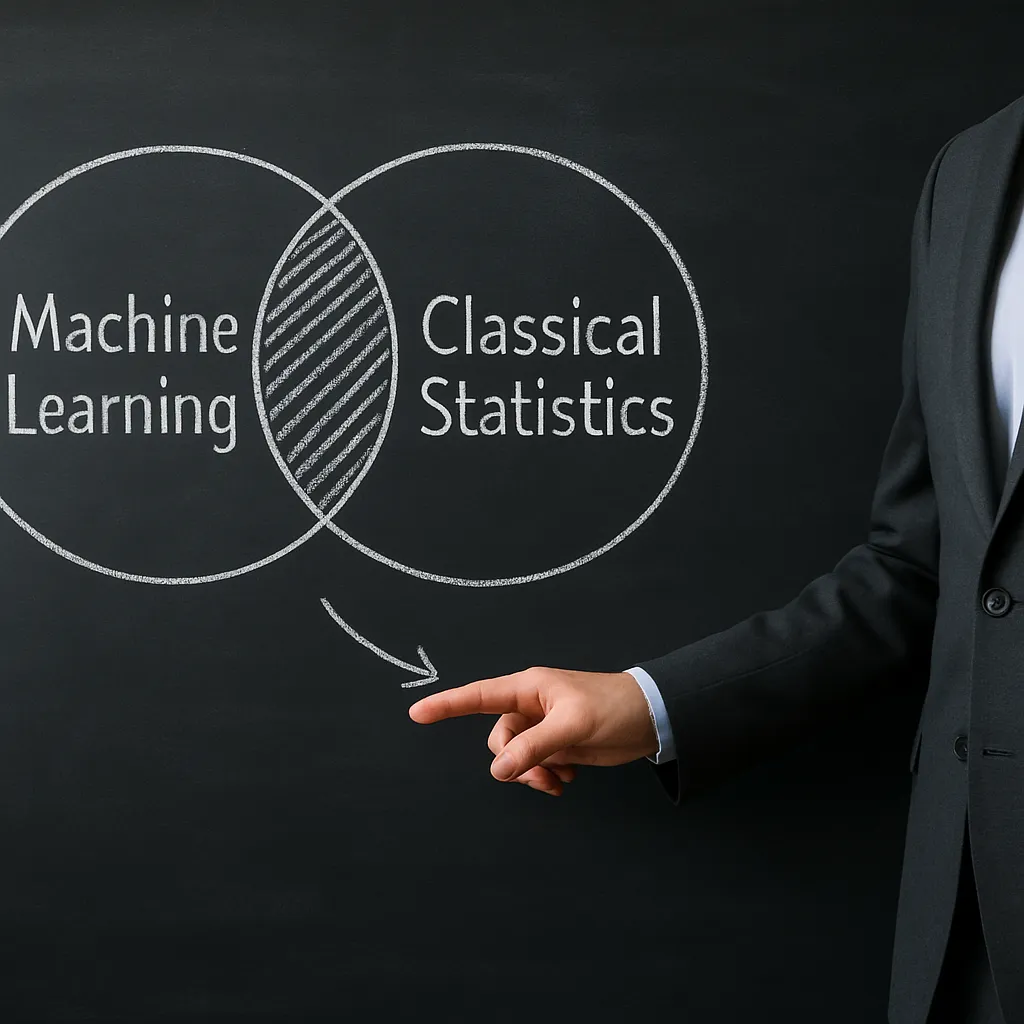
The synergy between data and mathematical frameworks has evolved dramatically over the past decades. Classical statistical methods laid the groundwork for rigorous inference and hypothesis testing, while modern algorithms from the field of machine learning have introduced powerful tools for prediction and pattern detection. By extending traditional paradigms with adaptive, nonlinear models, researchers and practitioners can achieve deeper insights and tackle more complex challenges. This article explores the fundamental principles of statistical theory, the integration of advanced computational techniques, and the emerging trends shaping the future of quantitative analysis.
Foundations of Statistical Inference
At its core, classical statistics focuses on estimating unknown parameters, testing scientific hypotheses, and quantifying uncertainty. Key concepts such as probability distributions, confidence intervals, and p-values provide a rigorous framework for evaluating the strength of evidence in experimental and observational studies. For centuries, statisticians have refined methods that balance precision against the risk of false discoveries, ensuring that conclusions drawn from finite samples remain robust.
The workflow of statistical analysis typically involves:
- Formulating a probabilistic model to describe the data.
- Estimating parameters using techniques like maximum likelihood estimation and method of moments.
- Evaluating model fit via goodness-of-fit tests and residual analysis.
- Conducting hypothesis tests to validate or refute scientific claims.
Despite its strengths, classical inference often relies on assumptions of linearity, normality, and homoscedasticity. When these conditions fail, the validity of results can be compromised. This limitation paves the way for machine learning approaches that can handle more flexible structures and adapt to complex, real-world datasets.
Integrating Machine Learning Techniques
Machine learning (ML) brings a wealth of algorithmic strategies to address shortcomings in traditional methods. By leveraging computational power and large-scale optimization, ML models excel at uncovering intricate relationships within high-dimensional data. The fusion of statistical rigor with adaptive learning yields a hybrid methodology capable of both interpretation and performance.
Supervised Learning and Statistical Perspective
In supervised tasks, models learn to map inputs to outputs by minimizing a loss function. Linear regression and logistic regression, staples of statistical education, align directly with ML approaches when viewed through the lens of empirical risk minimization. Extensions such as regularization (ridge, lasso) introduce optimization constraints that prevent overfitting and enhance interpretability.
Unsupervised Learning and Exploration
Unsupervised methods emphasize the exploration of latent structures without explicit labels. Techniques like principal component analysis (PCA) and factor analysis share origins with statistical dimension reduction. Modern variants, including autoencoders and manifold learning, further extend these ideas by capturing complex, nonlinear embeddings.
Ensemble Methods and Robust Inference
Ensembles, such as random forests and boosting, demonstrate how aggregating multiple weak learners can lead to significant gains in predictive accuracy. From a statistical standpoint, these methods reduce variance and provide more stable estimates. Bootstrap aggregation (bagging) has a firm basis in resampling theory, while boosting algorithms reveal connections to additive model frameworks.
Key advantages of integrating ML into statistical practices include:
- Enhanced capacity to model nonlinear interactions without explicit specification.
- Ability to process massive datasets with high scalability.
- Robustness against violations of classical assumptions.
- Automated feature selection through embedded regularization.
Practical Applications and Emerging Trends
The convergence of statistics and machine learning has driven advancements across diverse domains. In genomics, practitioners employ penalized regression and tree-based models to identify genetic markers associated with disease. In finance, time series analysis augmented by recurrent neural networks captures market dynamics more effectively than classical ARIMA processes alone. Marketing analytics leverages clustering and matrix factorization to uncover customer segments and predict purchasing behavior.
Several emerging trends illustrate the ongoing evolution of quantitative analysis:
- Bayesian Deep Learning: Combining Bayesian inference with neural network architectures to quantify uncertainty in complex models.
- Probabilistic Programming: Frameworks that facilitate the specification of hierarchical and mediated models with automated inference engines.
- Automated Machine Learning (AutoML): Tools that streamline model selection, hyperparameter tuning, and feature engineering, democratizing access to advanced methods.
- Interpretable AI: Methods aiming to preserve transparency and accountability, critical in regulated sectors such as healthcare and finance.
Bridging classical statistics and machine learning fosters a culture of continuous innovation. Researchers are developing hybrid models that incorporate prior knowledge through structured priors, melding the Bayesian paradigm with deep architectures. Furthermore, the rise of federated learning addresses privacy concerns by enabling collaborative model training without sharing raw sensitive data.
As datasets grow in volume and variety, the integration of statistical theory with algorithmic learning ensures that analysis remains both valid and powerful. By embracing this interdisciplinary approach, analysts can harness the best of both worlds—producing reliable estimates, robust predictions, and ultimately, more informed decisions across scientific and industrial landscapes.